
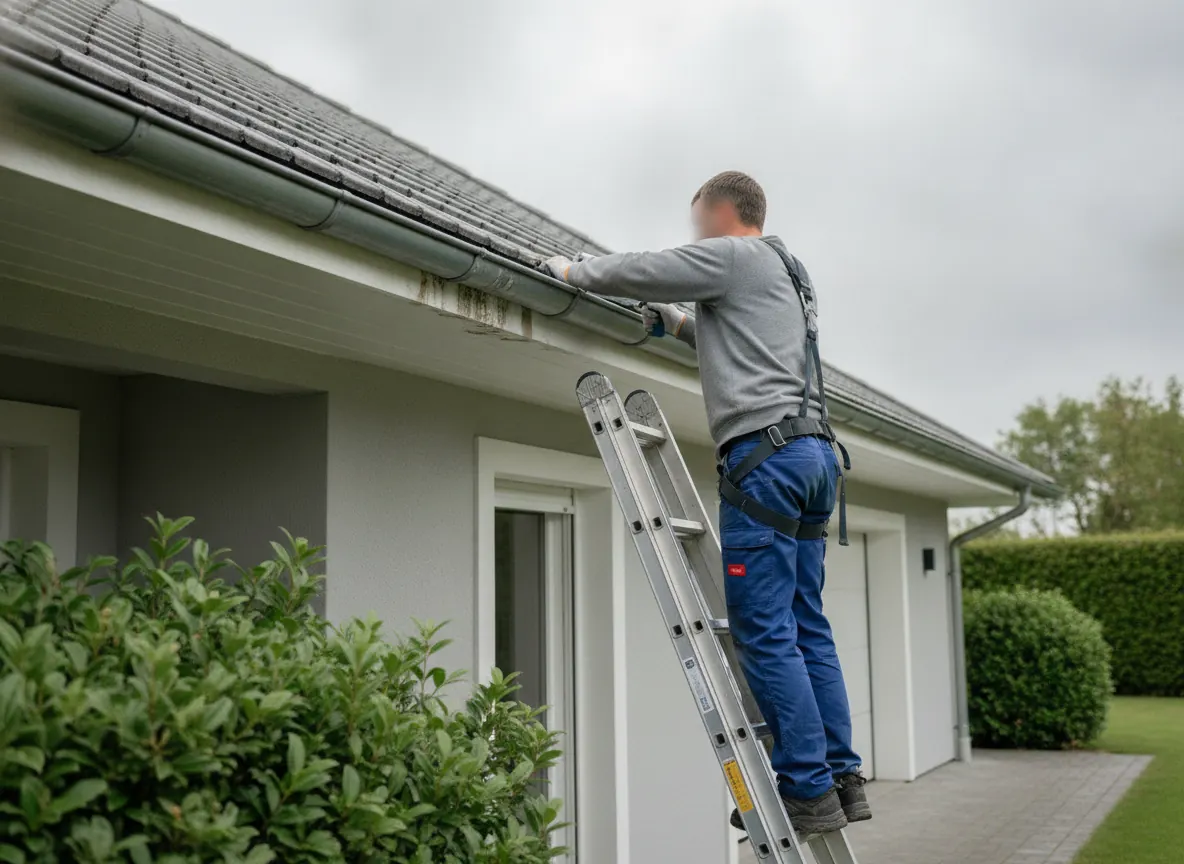
Hurricane season runs June through November, and in the Baton Rouge area the damage usually comes from wind and trees more than from the rain itself. Hurricane Gustav brought a 91 mph gust to Baton Rouge Metro Airport on September 1, 2008, according to NOAA records. During Ida in 2021 and Francine in 2024, downed trees and limbs were behind much of the damage and many of the power outages, according to local news coverage. Gutters sit right where falling limbs and wind-driven water hit a house, so a little preparation before a storm and a careful check afterward go a long way. This guide covers both, plus how to avoid the storm chasers who show up once the wind dies down.
Before the storm: a gutter checklist
Do these in the weeks before a named storm, not the afternoon it arrives. Stay off the ladder in high wind or rain.
- Clear gutters and downspouts. A clogged gutter full of water and leaves is heavy, and it is more likely to pull loose in high wind. Flush each downspout with a hose to make sure it flows.
- Check the hangers. Look for sections that sag, gaps between the gutter and fascia, or loose fasteners. Those are the spots that peel off first.
- Look at the seams and end caps. Drips at the seams today become a steady stream during a tropical downpour.
- Point downspouts away from the house. Reattach any extensions and splash blocks. On flat, slow-draining Baton Rouge soils, water dumped at the slab tends to pond.
- Have overhanging limbs trimmed. Hire a tree professional for anything near the roof or power lines. Limbs are the biggest threat to gutters in a storm.
- Take dated photos. Photograph every side of the house, including the gutters and fascia. If you need to file an insurance claim, "before" photos help.
- Bring in loose items. Ladders, patio furniture and yard decorations can be thrown into gutters by the wind.
If an installer finds sagging, rotted fascia or failing seams before the season, fixing them early is usually cheaper than an emergency repair. See our gutter repair page for common fixes.
After the storm: what to check (safely)
Safety comes first. Watch for downed power lines, never climb onto a wet roof, and do not use a ladder near damaged lines or in gusty wind. Much of this check can be done from the ground.
- Photograph everything before cleanup. Wide shots and close-ups, with dates.
- Walk the perimeter. Look for bent or crushed sections, gutters pulled away from the fascia, missing downspouts and hanging pieces.
- Look at the fascia boards. Cracks, gaps or dark, soft wood behind a gutter mean water or impact damage. See gutter replacement and fascia repair.
- Check where water is going. During the next rain, watch for overflow, leaks at the seams and water pooling against the foundation.
- Clear debris once it is safe. Storms pack gutters with leaves, twigs and shingle grit, and clogged downspouts can back up quickly.
- Make temporary fixes only. Remove a dangling section that could fall on someone, but leave permanent repairs until you have written quotes.
Storm-chaser red flags
After a big storm, unfamiliar contractors often go door to door. Some are legitimate, but this is also when homeowners are most likely to be pressured or scammed. Be cautious when someone:
- Knocks on your door uninvited and says they "noticed damage" and have a crew in the area today.
- Pressures you to sign right now, before you can get other quotes.
- Wants cash only or a large payment before any work or materials arrive.
- Won't give a full business name, local address or a written contract.
- Offers to handle your insurance claim for you or to "take care of" your deductible.
- Can't or won't show a current certificate of insurance.
Louisiana rules homeowners should know
This is general information, not legal advice. Laws change. For questions about a specific situation, contact the Louisiana State Licensing Board for Contractors (LSLBC) or an attorney.
Registration and licensing thresholds
According to the LSLBC and Act 178 of 2024, residential home improvement projects of about $7,500 and up (and under $50,000) must be performed by a registered home improvement contractor or a licensed contractor, and projects of $50,000 or more require a residential license. Most gutter-only jobs fall below $7,500, but gutters, guards and drainage work on a large home can go over that line, and storm repairs bundled with other exterior work can too. Act 178 also requires home improvement contracts in that range to be in writing. Either way, get a written contract.
Per the LSLBC, registration requires proof of general liability insurance and workers' compensation coverage. An LSLBC memo on 2026 legislative changes (Act 757 of 2026) says the minimum liability coverage for home improvement registrants rose to $500,000 in 2026.
How to look up a contractor on the LSLBC site
Go to the LSLBC contractor search
Visit lslbc.gov and open the Contractor Search. You can search by company name, license number, city, parish or contractor type.
Confirm the right listing is active
Check that the company shows an active Home Improvement registration or Residential license under the same name on your contract. The board notes only current licensees appear, and recent changes may lag.
Ask for proof of insurance
Request a current certificate of insurance showing liability and workers' compensation coverage, and check the dates.
Call if anything is unclear
The LSLBC can be reached at 225-765-2301, and complaints can be filed online.
Our upcoming guide on checking a gutter contractor's license in Louisiana goes into more detail.
The 45-day rule
Under La. R.S. 14:202.1, the residential contractor fraud statute, intent to defraud may be inferred when a contractor takes payment and then fails to perform any work for 45 days or longer, unless the contract specifies a longer period. The same statute lists failing to hold a required home improvement or residential license as another basis for that inference. In practice: get start and completion dates in writing, keep records of every payment, and be wary of paying much up front to someone you cannot verify.
Price gouging
La. R.S. 29:732 prohibits charging more than pre-emergency market value for goods and services during a declared state of emergency, with exceptions for genuine cost increases. If post-storm prices look wildly out of line, get other quotes in writing and keep a record of what you were charged.
This is general information, not legal advice.
Repair or replace after storm damage?
A single bent section or a loose hanger can often be repaired. Widespread denting, multiple sections pulled off, or rotted fascia behind the gutters usually points to replacement. If you are replacing, it may be a good time to consider 6-inch gutters with larger downspouts and guards that shed storm debris. Typical installed aluminum ranges in Baton Rouge are about $5.90–$10.30 per foot (HomeBlue, 2025), but these are estimates. Check our cost guide and get written quotes.
Get storm repair quotes without the pressure
We connect Baton Rouge-area homeowners with independent local gutter installers for free, no-obligation quotes. You choose who to hire, and you can check any company on the LSLBC site first. Request a free quote, and we usually reply the same day.